#50Over50 -What Happens Next. Do you want to write a novel?

About the author

Ann is a co-founder of PR Academy. Her special areas of interest are internal communication, change management and project communication. MSc, Dip CAM, Hon FCIPR

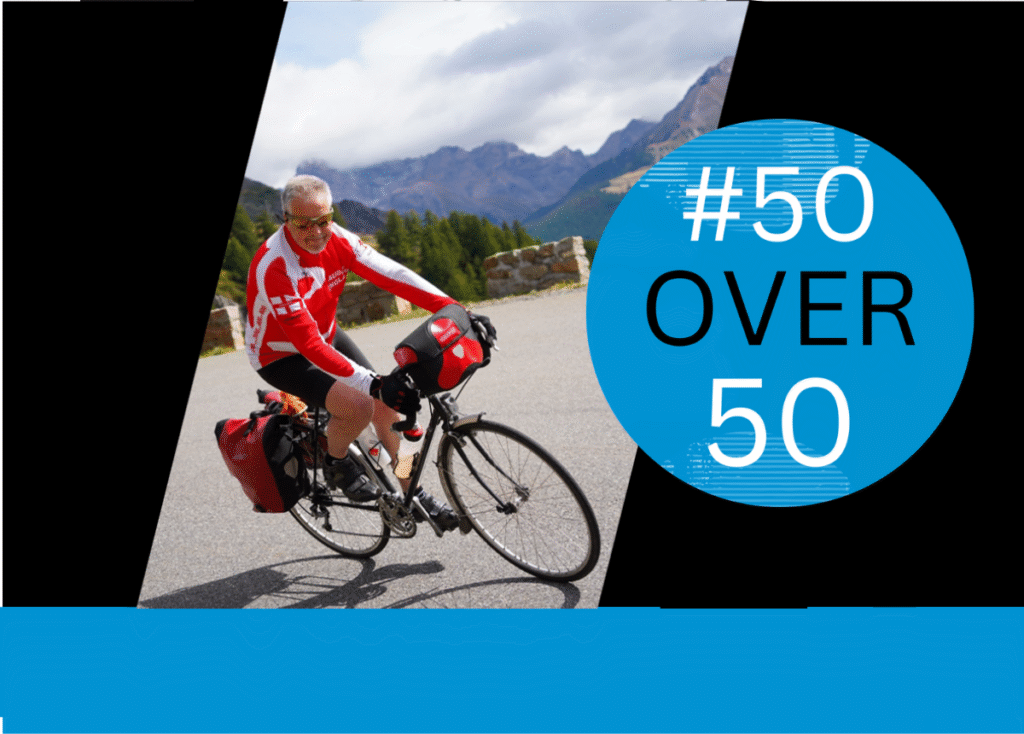
Rob McIvor descends the Col de Vars in the French Alps at about 30mph!

It is often said that ‘everyone has a book in them’ if this sounds like you – read on!

For the latest in my #50Over50 series looking at career changes and new skills I’m talking to my former colleague and corporate communication specialist Rob McIvor.

Rob’s first novel hit the stands earlier this year. ‘What Goes on Tour’ is a twisty-turny story set in the world of cycle racing.  Given that Rob is the sort of cyclist that thinks nothing of setting out on his bike from London to cycle to Edinburgh and back again without really stopping, the setting came as no surprise.

Cyclists will love his book, but so will PR folk because running through the two-timeline story is the question of if, and when one should speak up about something that’s just not right. It’s an ethical dilemma that can rear its head in our industry and the book makes you think about your own personal red lines. (In fact, it was the topic of discussion at the recent PRCA Fellows’ lunch.)

The career back story

Rob says that he always wanted to write and was encouraged at age ten by his primary school teacher Mr Batten, albeit accompanied by a warning that it wouldn’t make him any money.  (I love how fondly Rob remembers him!)

It was this enjoyment of writing and storytelling that led him to a career first in trade journalism and then PR. But the social and contact-making side of our industry has never been for him.

I was happiest behind the scenes writing and editing.

From working for Wickes, Rob moved to The Woolwich Building Society (soon to be a bank) which is where we met.  My memory of working with Rob is of someone highly strategic and able to take complex financial business information and make it make sense. I also remember how respected he was by the journalist community.

The Woolwich had been a mutual organisation – a building society – but Rob joined as it was making the transition to a PLC. This demanded a completely different approach to communication and Rob’s storytelling skills were just what the business needed.  He used them to help the company craft a narrative for potential shareholders and customers.

From The Woolwich (which no longer exists having been bought by Barclays) Rob went to the Financial Services Authority where his gift of communication genuinely shaped the way some journalists covered financial stories.

The inspiration

A number of senior corporate comms roles followed before Rob made the leap to write full time.

Leap probably isn’t the right word though as one of the triggers for his career change was a very nasty cycling accident that left him in hospital and then on crutches. He wasn’t going to be leaping anywhere for a while! What with that and then COVID he decided he wanted a better balance in his life, more time to support his wife and son.

So he switched to freelance work and with the extra time he had, began to write short stories.

It wasn’t long before the big trigger arrived. He entered one of his short stories in an international competition and won. The story was published in an anthology and it was just the boost he needed.

I started writing the book then, but without much of a structured approach. I had a core idea but I made it too complicated – I actually had an Excel spreadsheet to help me keep track of the characters!

Have you got a book in you? If so, here is Rob’s advice…

Just get started! Don’t try to edit as you go.

People often say ‘write what you know’ but he says that you don’t have to be an expert so long as you do your research thoroughly.   Having said that, Rob really knows his cycling, and I loved the parts of the book where he is describing a race – you really feel like you’re there.

My wife described it as the Queen’s Gambit for cycling.

The Queen’s Gambit is a Netflix mini series set in the world of chess but you don’t have to be into chess to love the story. (If you haven’t watched it, I’d really recommend it.)

Rob is part of a local writing group and also had a lot of help from ‘beta readers’.

I had ‘beta readers’ in the cycling community – people who read the book for me and helped to check things. This was really helpful. One reader shared a fact with me about a tactic that racers in the early days of the Tour de France used, something I hadn’t known, and it’s now a key element of the story.

Rob aims for 1000 – 1500 words a day and writes at the kitchen table, the garden summer house, in a café, or in wonderful local second-hand bookshop in south east London where writers are encouraged to sit and write.

One of the big challenges though isn’t the writing, it’s getting published. I was keen to understand more about the process.

Rob has published through the Book Guild in a partnership agreement under which the author contributes a small amount, effectively paying for editing and proof reading, and then they do the rest, including design and marketing. Be prepared for a long lead time – the whole process took about ten months but that is still considerably quicker than going through a mainstream publisher, which can take a couple of years.

20 years ago, self-publishing was seen as a vanity project, but not anymore. Many authors are doing it by choice. Technology helps and social media enables authors to do their own marketing – it can be really profitable.

But don’t get too excited – even top authors need a side hustle! Mid range authors are probably only making about £7000 a year.

Mr Batten from primary school was right!

Rob adds that an important thing to remember is that publishing is a business like any other and needs to make money. As result it can be fixated on genres, such as Cosy Crime or Action Thriller. You need to consider whether your topic fits with the genre of the day.

Mine didn’t, so I could have wasted a couple of years taking it from one literary agent to another before getting a deal when what I really wanted to do was get on with the next book before my pension started arriving.

Social media is an important part of the promotional mix too. Rob admits that he still hasn’t quite cracked Instagram (you and me both Rob!).

The advert!

As I said at the top, What Goes on Tour is a story of twists and turns.  I found it an easy and enjoyable read with the shifting between time lines keeping me on my toes.

The book is available in paperback and e-book format on Amazon and through local bookshops and all online retailers.

Get What Goes on Tour on Amazon

Rob says it makes a great gift for the cyclist in your life, but I think that it will also resonate with those of us in PR – because of the ethical dimension.  Plus, of course, it’s a great story!

Rob publishes some of his other work on his website and has two more books ready to go, both set in Blackheath in south east London. Not so much cycling in these but Rob being Rob can’t quite let the cycling theme go, he tells me that one involves a crime committed using a Lime Bike……..

Discover more of Rob’s writing on his website