How our courses work
Our ‘join anytime’ courses are super flexible and come with lots of support.
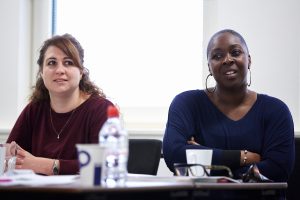
Discover more about how our courses work
Ann Pilkington, co-founder of PR Academy explains how our Guided Learning courses work, demonstrates our Study Hub and explains the resources and support you will receive. Also hear from members of the PR Academy alumni. (Note that not all features apply to our Independent Learning option.)
Hear from others
Discover the benefits of applying theory to practice from Leila.

Need some one-to-one advice?
Book a FREE Career Consultation Call. Talk to one of our experts about planning your career and which qualification is right for you.
Got a question?
Call our friendly team on +44 (0)20 3862 6910 or email [email protected]
Discover more
All our learners benefit from our extensive online library, on-demand lectures from expert tutors, podcasts and case studies.
Our Guided Learning programme also includes live online lectures on a range of topics plus one-to-one tutorials.
Independent Learning: Go for this option if you are happy to study independently and don't think you'll need tutorials and live sessions. We launched this option to make the learning more affordable and if you are joining us from outside the UK you probably won't pay sales tax (VAT).
Guided Learning: Go for this option if you like the idea of access to one-to-one support, live sessions and detailed feedback on assignment proposals.
Still not sure? Book a course advice call and chat it through.
They aren't heavily academic. We still discuss theory because that’s what makes us better practitioners, but we show how to apply it in practice. We call it applied learning.
The assignments are mostly in the style of business writing rather than academic essays or dissertations.
It isn’t essential, for example, you can study while on a career break. For some of the higher level courses, you will need experience. For example, for CIPR Diploma level courses you need to have a minimum of five years’ experience and be at a reasonably senior level.
Some of the assignments are designed to be based on your work but if you aren’t currently employed a tutor can help you with other options.
It varies according to the course and the stage you are at. As a very general guide, think about allowing between two and four hours a week, but this can increase when you are doing an assignment.
Most courses have a maximum completion time, allowing you to either spread learning over a longer period or complete it more quickly by studying more hours each week.
For example, the CIPR Professional PR Diploma can be completed comfortably in about ten months. The short CIPR diplomas can be completed in about six months and the Foundation in about two months. But all can be done more quickly if you have the time.
We offer plenty of support. Many courses offer individual tutorials that can be booked. The course leader is readily contactable and there is always someone in the office who can help with day to day queries.
Yes, most of our students are working full time and many have family commitments too. While the courses are demanding – they wouldn’t be of value if they weren’t – the pace of learning and the flexible options make it possible.