Africa’s brand crisis: Three storytelling lessons from decades of uneven storytelling that shaped global perceptions.

About the author

Linzi is a Brand, Reputation and Communication Team Lead at Oikocredit. She prepared this article for a CIPR Professional Diploma assignment while studying with PR Academy.

It’s a tale as old as time. The story of Africa: one homogenous place, riddled with poverty, corruption and violence.

Despite unprecedented access to global news and information, this oversimplified storyline about one of the most diverse continents on earth continues to shape global perceptions. Africa has a brand crisis. But how does this negative narrative continue to get reinforced, and what are the real-world consequences?

This article examines these two questions and distils three storytelling lessons to equip global leaders to reflect on the brands they steward and, more broadly, on how Africa is understood and considered in global decision-making.

Three lessons

Lesson 1: Homogenisation

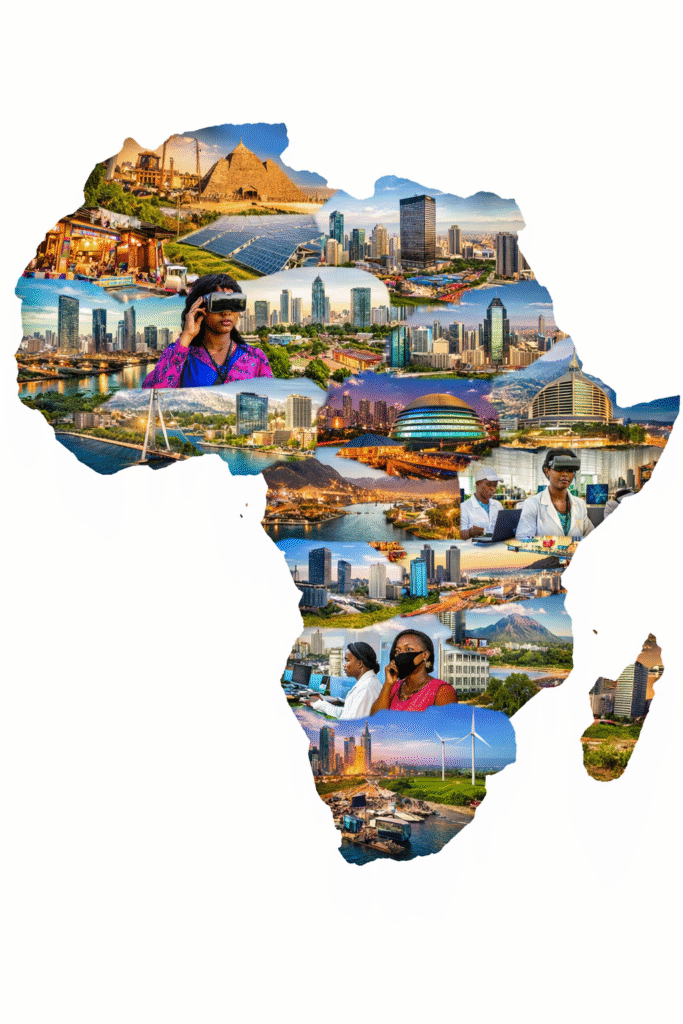
Homogenisation is a framing shortcut that collapses complexity into a simplified narrative, and Africa is one of its most persistent examples. From early childhood, it is common in the West to see stories with phrases like “France, India, and Africa,” where an entire continent is grouped alongside individual countries. This is also the case in global media practices, where leading news outlets commonly report on only a small subset of African nations, as shown by the Global Media Index results from 2024. Similarly, in business media coverage, stories are concentrated on just a couple of countries like South Africa and Nigeria, perpetuating the impression that Africa’s story is much less diverse than it is in reality.

Communication scholars like Robert Entman explain why this type of framing matters. In his 1993 definition, Entman described framing as “selecting some aspects of a perceived reality and making them more salient in a communicating text, in such a way as to promote a particular problem definition, causal interpretation, moral evaluation, and/or treatment recommendation.”

For Africa, reducing the continent to a single, simplified frame makes it far easier for a narrow and enduring story to take hold.

Our first leadership lesson, then, is that oversimplification may streamline a narrative, but it can also create a foundation that doesn’t serve the brand in the long run. Being precise early on is crucial to develop a positive brand story.

Lesson 2: Attaching a negative story

The next factor that has shaped Africa’s reputation crisis is the negative image of the continent that has been developed over decades. Built on the homogenised frame we just explored, and reinforced through cultural moments, media coverage, and humanitarian narratives, Africa is repeatedly presented as a place defined by poverty, violence, and corruption.

One example of this portrayal is the pop hit “Do They Know It’s Christmas” by Band Aid. Originally developed as a humanitarian fundraising effort for a devastating famine in Ethiopia in the 1980s, the song referred to Africa as a whole, collapsing national and regional distinctions. A hopeless picture of the continent was then presented through lyrics such as “where nothing ever grows, no rain or rivers flow…” 

Despite accessible information that countered these lyrics, such as Africa’s vast natural resources, the combination of shocking images coming out of Ethiopia, mixed with popular artists singing emotional lyrics, was a powerful formula for the Western public. The facts of the situation became less important, emotions took the lead, and the Christmas hit remains a favourite to this day.

Again, communication scholars help explain this. As it turns out, the song employed persuasive principles dating back to Aristotle’s The Art of Rhetoric (384–322 BC), which argues that persuasion rests on three pillars: ‘Ethos’ (the credibility of the communicator – in this case, trusted celebrities), ‘Logos’ (the logical argument – in this case, the famine, illustrated through shocking images), and ‘Pathos’ (emotional appeal – something music conveys exceptionally well).

Karl Weick’s sense-making theory extends this explanation further, as it shows how experiences like the Band Aid song become ‘sense-making anchors’ for the public: familiar reference points which are used to make sense of Africa as a whole.

This is why singular moments like this continue to shape interpretations of Africa decades later.

Our second leadership lesson is therefore that emotional storytelling is powerful but must be informed and handled with care to avoid creating narratives that mislead, or cause harm.

Lesson 3: A spiralling narrative

A third element of Africa’s brand crisis comes from the dynamics that come into play when a negative narrative settles into a reputation that sticks. We know from sense-making theory that people attach themselves to familiar narratives. As these stories circulate repeatedly through global media, they begin to set the terms of reference. Today, 81% of the news stories about countries in Africa are ‘’hard news’’, such as conflicts and crises, and even African media often reproduce these same, limited narratives. The negative spiral is therefore hard to stop, even with initiatives such as Brand Africa, which aims to turn the stories around.

Our third leadership lesson is therefore that once a brand story gathers a strong enough negative image, this gets amplified through repetition and eventually, absorbed as truth. Intentional stewarding of a brand narrative is key to protecting it.

Consequences and responsibilities

So what is the impact of all this negative storytelling on the African continent? Is there a price tag beyond what the British-Ghanaian rapper Fuse ODG called an identity crisis, and what Nigerian author Chimamanda Ngozi Adichie referred to as the ‘’single story’’?

According to the report “The Cost of Media Stereotypes to Africa”, the impact of biased narratives goes far beyond global perceptions. The study estimates that Africa’s inflated risk profile, driven by persistent negative and stereotypical portrayals in global media, could be costing the continent as much as $4.2 billion every year in additional interest payments on sovereign loans. This means that African nations are paying a premium simply because of how they are framed internationally, diverting critical resources away from priorities like healthcare, education, and infrastructure.

Africa’s brand crisis is a powerful reminder that reputation can easily be shaped by emotional stories and perpetuated by consistency, even when these stories are misleading and lack nuance. Framing matters, and unchecked narratives can cost billions, whether for a continent or a company. These lessons call on leaders not only to steward their own brand narratives with care, but to scrutinise how Africa is framed and dealt with in global decision-making.

__________________________________________________________________

Linzi’s perspective on studying for the CIPR Professional PR Diploma 

Linzi prepared this article for a CIPR Professional Diploma assignment while studying with PR Academy.

What do you see as the key benefits of studying the CIPR Professional PR Diploma?

The course has given me a shared language with peers and frameworks I can actually point to when making strategic decisions. I feel like the Diploma signals that I take the profession seriously, and has helped me become part of a professional practice beyond my day-to-day work.

What has been your favourite part of the course so far?

The assignments have forced me to slow down and think strategically, and that is where I have got my best learning. I work at quite a fast pace, so being pushed to step back and interrogate things at a deeper level has helped me make better and more informed decisions in the longer term. I have also really enjoyed the examples of my peers’ work – to see how people approach similar challenges in different sectors has been very enlightening.

Have you been able to apply any of the learning, and if so, how?

Yes, almost immediately. I work in impact investment, so a lot of what I do involves translating complex financial and social narratives for very different audiences: members, investors, partners. The stakeholder mapping and messaging frameworks have helped me be more intentional about that.

About the CIPR Professional PR Diploma 

The PR Diploma is a Master’s level qualification for more experienced practitioners who are looking to underpin what they do with theory and contemporary models.  Topics include PR strategy and planning, content management, media and engagement, measurement and evaluation, and PR leadership and process improvement. 

You have two years to complete it, but with PR Academy, you set your own study pace, and many students finish in about ten months. 

Read our Complete Guide to CIPR Qualifications