Shifting the dynamics of science communication
About the author
Clara Demin worked for many years in corporate communications, media monitoring and insights in global pharma and high-tech companies in Switzerland. She prepared this article for a CIPR Professional PR Diploma assignment while studying with PR Academy.
Scientists must enter high-stakes conversations to shape public discourse and drive human progress. PR people can help.

In October 2024, the torrential rain in Spain, killing 232 and causing over $10 billion in total damage sparked frustration among climate scientists, who called for a shift in tone. The prevailing misconception—that the devastating effects of fossil fuel consumption are confined to Southern regions—has “perpetuated a false sense of security”, leaving stakeholders inadequately prepared. In 2019, more than 12,000 scientists signed a petition following the publication of multiple warning reports, assuming that society would act on scientific evidence. The outcome proved quite different. The reason? “Highly influential networks” propagated “alternative facts” to “spread doubt, influence policymaking, and mislead society.”
Society faces multiple issues, many relating to science. Climate is just one of them. Scientists have a critical role to play in forging a scientifically literate society that will trust policies and eventually join forces to solve societal issues. They must participate in high-stakes conversations—dialogic spaces where important decisions are made. Otherwise, that space will be occupied by other, more powerful voices. Yet, they often remain confined in low-risk spaces or engage after public opinion has crystallized and key decisions have been made.
Why do academic scientists feel nervous about sharing science publicly or about partnering with communication professionals, and what is the role of PR in leveraging the impact of science communication? Amid evolving dynamics in public discourse, there is a pressing need to rethink the science communication model to better serve society, economy, and promote human advancement.
Three misconceptions on scientists’ ethical duty
The era of uncertainty in which science communication entered after the COVID pandemic (attacks on scientists for tweeting their views) and the rise of social media (spread of misinformation) questioned scientists’ freedom to communicate publicly. This narrative shifts the cause of the problem away from the actual ethical duty of scientists, and overlooks the critical role of PR in creating a safe space where they can communicate with impact. This is where the dynamic shift starts, namely the launch base of the message.
First misconception: Scientists must communicate because they are accountable to taxpayers (they have an implicit contract with society). This perspective, while undeniable, leads to the belief that scientists, “stewards of public knowledge”, should master communication skills and fully grasp the broader impact of their research, or ask funding bodies for insights. Otherwise, they may lose public support for science funding. This leads to most scientists publishing their own content on their own channels, without involving PR and other stakeholders.
Second misconception: Scientists should be open to all media inquiries. This approach carries the risk that journalists may misrepresent or oversimplify complex findings. This risk would be minimised if scientists listened carefully to the media agenda, and framed their messages accordingly.
Third misconception: Science communication is policymaking. This is not the same. Policymaking is when scientific advisors brief and counsel policymakers using scientific facts. However, policymakers need scientists to engage with the public to foster acceptance of science-based policies, especially when decisions are politically, morally, or scientifically challenging.
Better-informed citizens (are) generally more likely to trust science-based policies. A lack of public trust can have negative ramifications for scientific progress, societal values, and individual behaviour.(OECD)
A study identified five objectives for science communication. The first two – the responsibilities owed to taxpayers and the broader goal of inspiring society, were mentioned earlier. The last three are:
Educate on neglected issues, improve the quality of their discourse when decisions need to be made.
Influence public opinion and behaviour, particularly when these are clearly harmful.
Engage: Foster dialogue with diverse social groups, especially on scientific controversies, so that multiple perspectives are considered in shared efforts to address societal challenges.
To achieve these goals, one should grasp what is truly at stake in a societal issue, by regularly listening and maintaining a dialogue with stakeholders.
Scientists have the duty to listen to communities to inform their research, thus enhancing the relevance of their work to society. Listening to fishing communities affected by drought informed the research of Laura Petes—now a policy adviser and “fierce advocate” for scientists whose work impacts directly society. Her message: “Engage early and often with society”. This impact must then be communicated further to mobilize other stakeholders and drive change. This is where public relations professionals come in: by listening and engaging regularly with social groups affected, they can understand the context in which the conversation takes place, the favourable and divergent voices involved, and frame the news in a way it will resonate with the target audience. Having a “holistic understanding” of an issue and building trust with the audience prevails over possessing a deep knowledge on a subject, said a WEF advisor. This is true for policymaking, but not only. The next challenge is to cut through the noise.
The art of rhetoric: traveling through the “noise”
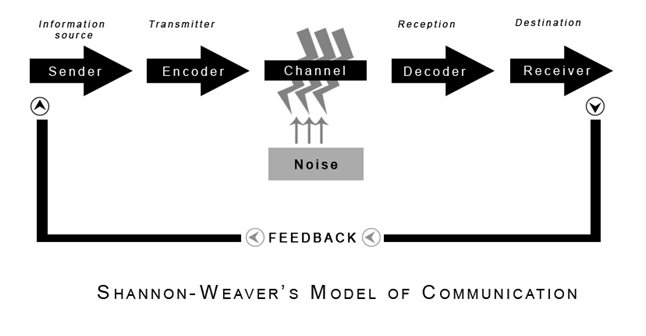
Noise refers to the distortion of a message during its transmission. High-stakes conversations are particularly noisy. Loud and influential voices can disrupt the delivery of your message by dominating the dialogic space (particularly through networks of advocates who spread their message further) which dilutes your communication. These dynamics result in misleading information, often spread by the media to “make sensation, scare people in believing facts from fringe scientists” (Bad Science). For science communication to fulfil its duty, it must expand its own space and build its own networks of advocates. A first way to achieve that is by mastering the art of rhetoric to present scientific facts (logos) and build your authority (your ethos). ScienceUp First, endorsed by a Canadian senator, used its authority as government-backed initiative to fight misinformation. It worked with independent scientists to cut through an overcrowded social media landscape. A main fear scientists have, though, is seeing their positions challenged. PR theory suggests, in that case, to use analogies, testimonials, endorsements, and comparisons to explain facts. For example, one could explain to a physicist the difference between high- and low-stakes conversations by comparing the plasma and gas states.
Ethos plays a role when addressing polemics. Sarah Hallberg used an authoritative platform—TED Talks, and her image as knowledgeable, young doctor to explain that “reversing type 2 diabetes starts by ignoring the guidelines”. For emotionally charged issues, such as cancer, combining storytelling with pathos and ethos has proven highly effective. Diagnosed with terminal cancer and given only weeks to live, Jane McLelland built her authority through her award-winning book and image of “motivational speaker” on multiple digital channels. However, science can also inspire people to adopt healthier behaviours, and celebrity endorsement is one technique: Cameron Diaz’ award-winning The Body Book interviewed multiple experts, including scientists. Rhetoric and persuasion skills are essential to help you increase your voice and educate on neglected issues.
The scientist: issues and crisis manager?
The scandal of cancer misdiagnosis in Arizona’s pathology laboratories in the 2010s became a national crisis largely through the use of rhetoric in a thought leadership campaign orchestrated by Ventana. According to PR theory, an issue is created when people start drawing attention on a problem: this rhetorical approach can be relevant to tackle neglected issues. Indeed, in crisis times, decisions are often less grounded in scientific evidence and more influenced by prevailing values and beliefs. Ventana’s scientists and communications team hired a PR agency to deploy a campaign which employed pathos (emotionally charged CNN headlines such as “Jaw removed”) and verbal cues (cases concluding with “Never had cancer”). The use of narratives involving villains, heroes, helpers and mentors addressed the emotional needs of audiences and envisioned a better future, implicitly pointing out at their breakthrough technology VANTAGE©.
Mobilizing social forces and joining the dialogue
Given the correlation between science-related issues and scientific innovation, technological advancement is a field where scientists can confidently demonstrate leadership. However, it is a very noisy space, where multiple voices spread very different messages online. We mentioned rhetoric as a first technique to cut through the noise. A second is to use “content curators”, namely experts, advocates who already established their authority in the public discourse and can build a highly engaged community. Also, curators can help audiences decode scientific messages. Given that social media has changed participation dynamic, it is critical in today’s social media landscape to disseminate your message through their network. This approach is even more recommended as many scientists shy away from addressing the public directly through social media and “only a few scientists currently seek the support of their communication department to establish, expand, professionalise their communication”. However, it also requires a mindset shift because you are no longer in control of your news, and may be less relevant to onboard new audiences in participating to the dialogue on science.
Partnering with the media, especially top-tier publishers, has proven to be an effective way to engage citizens in dialogue and appears to be scientists’ preferred channel for communicating science outside of crisis periods. Both media and science communicators have a common mission: show the value and significance of science in the development of mankind. The media can also engage communities by bringing together a plurality of perspectives to analyse a scientific-related issue from different angles. We identified two main ways to do that: by making scientists part of a broader story; by giving scientists a seat in public dialogues. Top-tier outlets FT and CNBC framed the huge role of microchips in semiconductors as a race for silicon supremacy and chip dominance. When scientists have a role to play in a story, their voices echoes more widely, while their messages take on new dimensions: we can talk of a “transformative dialogue”.
The media can also invite independent scientists to join initiatives such as the think tank Siggener Circle founded by Die Zeit. It highlights the various formats used by science communication to tap into new audiences: the science slams and the Massive Open Online Courses intended to non-expert audiences. Dialogue enables divergent voices to clash, thus advancing mutual understanding, as suggested by PR theory. This is what the Drug Information Association strives to achieve: “We should be leading them to the provocative questions.”
Concluding thoughts: “Neurons that fire together wire together”
PR plays an essential role in extracting the value of scientific research and bringing it to life in high-stakes conversations where it will take on a new, more powerful dimension. PR prepares a safe space for scientists to express their views, by listening actively both to the context and to the voices of stakeholders. PR cultivates a fertile ground for scientific news to flourish through regular dialogue with advocates. These will be critical to cut through the noise and decode your message. Through rhetoric and persuasion, PR builds your authority and transforms your message in a high magnetic field that attracts other voices. Ultimately, PR captures evolving dynamics in science communication and engages social forces to tackle pressing issues.
In today’s fast-paced, interconnected world, producing research isn’t enough—it needs to reach the right people, spark meaningful conversations, and drive change (…) That’s where your communications colleagues come in. (Gabriele Keseberg Davalos)

Clara Demin reflects on studying the CIPR Professional PR Diploma
•Thank you to Clara for sharing this article, written as part of the second assignment for the Chartered Institute of Public Relations Professional Public Relations Diploma.
For you, what do you see as the key benefits of having the PR Diploma qualification?
Although I don’t come from a traditional PR background, I’ve learned best practices from Communications executives and experience. The PR Diploma provides a solid framework to identify when and how strategic communication can address organisational challenges. It enables me to be a trusted advisor, backing recommendations with contextual intelligence. Ultimately, it helps me clearly define my role, what CEOs expect, and my license to operate in complex environments where the communicator’s role is often blurry or contested. This is a real benefit.
What has been your favourite part of the CIPR PR Diploma course so far?
I completed my studies a week ago, and my favourite part was the final unit on evaluating the effectiveness and ethics of a selected communication practice. With a strong interest in reputation as a key intangible asset, I enjoyed seeing how improving both ethics and effectiveness can ultimately support business performance. I was especially drawn to the AMEC framework, which I’d seen in agency reports without fully understanding it. Using it gave me confidence in aligning communication objectives with organisational goals. Researching audiences, their influencers, ultimately mapping stakeholders was my favourite part.
Have you yet been able to apply any of the learning, and if so, how?
I’m currently between jobs, but I’ve applied the learning from Unit 1—particularly problem identification and intelligence gathering—when tailoring applications for new roles. I’m also using these skills to structure a new thought leadership article, ensuring it’s grounded in strategic insight and aligned with broader societal challenges.
About the CIPR Professional PR Diploma
The PR Diploma is a Master’s level qualification for more experienced practitioners who are looking to underpin what they do with theory and contemporary models. Topics include PR strategy and planning, content management, media and engagement, measurement and evaluation, and PR leadership and process improvement.
You have two years to complete it but with PR Academy you set your own study pace and many students finish in about ten months.